
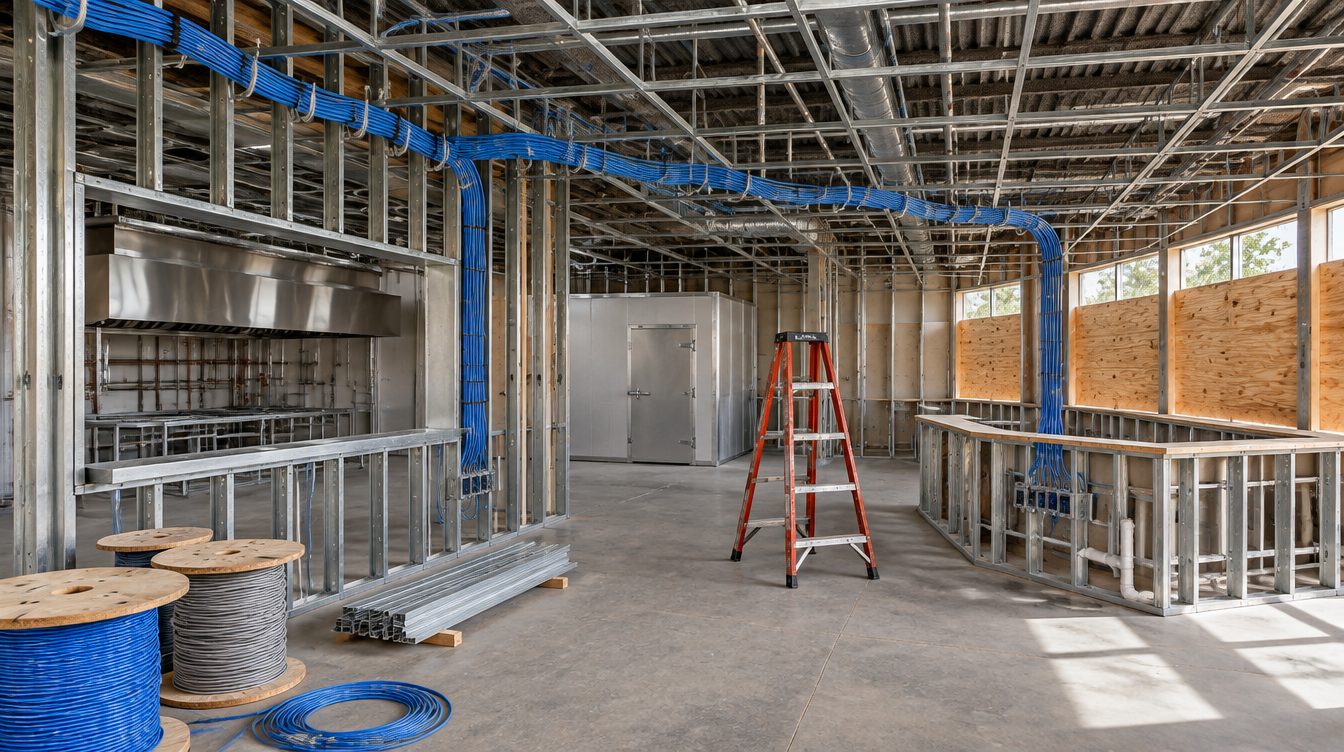
A restaurant security camera system in New York covers the front door, each register, the bar and the back door, records to a box in the locked closet, and keeps its microphones off. ClearMax technicians wire it with the rest of the network so every camera has a port and power.
Last updated: November 2026
Where the cameras go
- The front door and the host stand, for who comes in and when.
- Each register and the bar, angled at the drawer and the counter, not the keypad.
- The back door, the alley and the delivery entrance.
- The office door and the hall to dry storage and the walk-in.
No camera goes in a restroom or a changing area. No camera is aimed where it could record a guest typing a card PIN.
Why the microphones stay off
Many cameras ship with audio switched on. In New York that matters. Section 250.00 of the state Penal Law treats it as mechanical overhearing when someone who is not in a conversation, with no participant agreeing, intentionally records it. Under Penal Law 250.05, eavesdropping is a class E felony. A camera over the bar is not a party to the talk it hears, so audio is turned off at setup and left off.
Sizing the recorder for New York's notice window
Recording time is sized from the camera count and the days the operator wants to look back. New York's breach statute calls for notice in the most expedient time possible, and thirty days after discovery at the latest. Footage and door logs that outlast that window help show what was reached. General Business Law 899-bb names physical safeguards that detect, prevent and respond to intrusions. A camera covers part of that list; it never covers all of it.
The cable plan behind them is on the restaurant network cabling page.